The method, made visible
About
An independent company for understanding complex systems.
Wonder Constant Labs builds instruments, datasets, models, and software for systems that are hard to explain — and tries to be honest about the limits of any explanation, including its own.
01 — Observe
Observation is the method.
A question becomes tractable the moment you can say what would count as an answer.
02 — Model
Instruments, datasets, models, and software.
The apparatus that turns a record of what happened into something another person can run.
03 — Understand
Engineering data into understanding.
Models, systems, and tools you can reason with, test against, and be wrong about in public.
Wonder is the constant.
Fig. An abstract visualisation of the method — not a dataset, an instrument, or a result.
01The foundational idea
Life is math.
Not a claim that the world reduces to numbers, and not a statement that meaning dissolves once you write it down. Mathematics is the most reliable language we have for saying what evidence implies — precisely enough that someone else can show us we are wrong.
Its usefulness comes from its refusal to be approximately meant. That is the whole reason we build on it.
02Research philosophy
The Wonder Constant
Wonder remains present across every system being investigated, even as the system, the evidence, the models, and the conclusions change.
Work on enough different systems and almost nothing carries over: the instruments differ, the data has a different shape, the models are the wrong family entirely. What carries over is the willingness to be genuinely uncertain and to find out rather than decide. It is also the thing most easily lost — wonder degrades into conviction quietly, and nothing announces the transition while it is happening.
Measured wonder is what holding it fixed looks like in practice: curiosity disciplined through observation, measurement, modelling, testing, and revision.
Fig. Every line in the field is displaced by the transformation. The axis, and the point on it, are not.
03Positions
What we hold, and why
Six commitments that determine what gets studied here and how it gets reported.
01 / Why the company exists
Some systems resist simple explanation
Weather, markets, language, ecosystems, engineered infrastructure — many of the systems that matter most do not yield to a single formula or a tidy story. The patient work of observing, measuring, and modelling them is worth doing on its own terms, independent of any one industry or agenda. That is what this company is for.
02 / Why it is interdisciplinary
No single field owns complex systems
Real systems do not respect departmental boundaries. One question can need a statistician, an engineer, and a programmer looking at the same evidence at the same time. We combine mathematics, computation, data, and empirical method not as a style, but because the problems require it.
03 / Why measurement comes first
Nothing downstream beats the instrument
A conclusion can only be as good as the instrument that produced its data — and instruments are usually inherited rather than examined. So we treat characterising the instrument as part of the measurement: what it misses, at what resolution, and whether it fails loudly or quietly. An instrument that fails quietly is worse than none, because it still produces numbers.
04 / How engineering fits
Understanding is built, not found
A question becomes answerable when you can build something that measures it, and a model becomes useful when someone other than its author can run it. Engineering converts curiosity into apparatus and analysis into tools — pipelines, simulations, estimators, software. Without it, a result stays a claim inside one person's notebook.
05 / How initiatives are chosen
A question we could be wrong about
An idea enters as exploratory: something we are still deciding is worth a full effort. It advances only if we can name what would count as evidence against it, and only if we can see the instrument that would produce that evidence. If neither is available, we close it. Most ideas do not make it through, and that is the selection working rather than failing.
06 / Why we publish our methods
A result you cannot inspect is one you cannot trust
We would rather be checkable than impressive. That means publishing methods alongside results, stating assumptions where they can be attacked, and reporting uncertainty as part of the finding rather than as a footnote to it. Uncertainty is not a weakness in a result. Unmeasured uncertainty is.
04Why a company
Research designed to become infrastructure.
A notebook of experiments would be cheaper and easier to start. It would also stop at the point where the work becomes useful to anyone else — which is the point this was built for.
01 / Durability
Investigations that outlast their enthusiasm
Some questions only resolve on a timescale longer than one person's interest in them. A company can hold an investigation open across that gap — funding the boring middle, keeping the instruments maintained, and returning to a question that did not resolve the first time.
02 / Reuse
Instruments built to be used twice
An instrument written for a single analysis dies with it. Built as software with a stated interface, characterised limits, and a way to check it is still working, the same instrument serves the next question and the one after. That is the difference between a script and infrastructure.
03 / Artefacts
Datasets and models someone else can run
Understanding travels as artefacts: structured datasets with their provenance intact, models with their uncertainty attached, and tools that run outside the environment they were written in. We would rather ship one of those than three papers about them.
04 / Collaboration
A structure other disciplines can attach to
Serious work on a complex system usually needs more than one kind of expertise at the same table. A company is a thing a statistician, an engineer, or a domain specialist can actually work with — with a defined scope, a published method, and someone answerable for the result.
05 / Consequence
Methods that become systems
When a method becomes useful, the honest next step is to make it usable: a service, a library, or maintained software. That path is no longer hypothetical here. RECON is a live commercial product—the Lab's method applied to a practical problem, sold without pretending a checkout receipt is a research result.
06 / Obligation
Somewhere for negative results to live
A company that publishes its limitations, its uncertainty, and the questions it closed is holding itself to a standard an individual can quietly drop. The structure is what makes the obligation survive a bad month — and eventually what lets the Lab support researchers and engineers as the work grows.
05Accountable for this
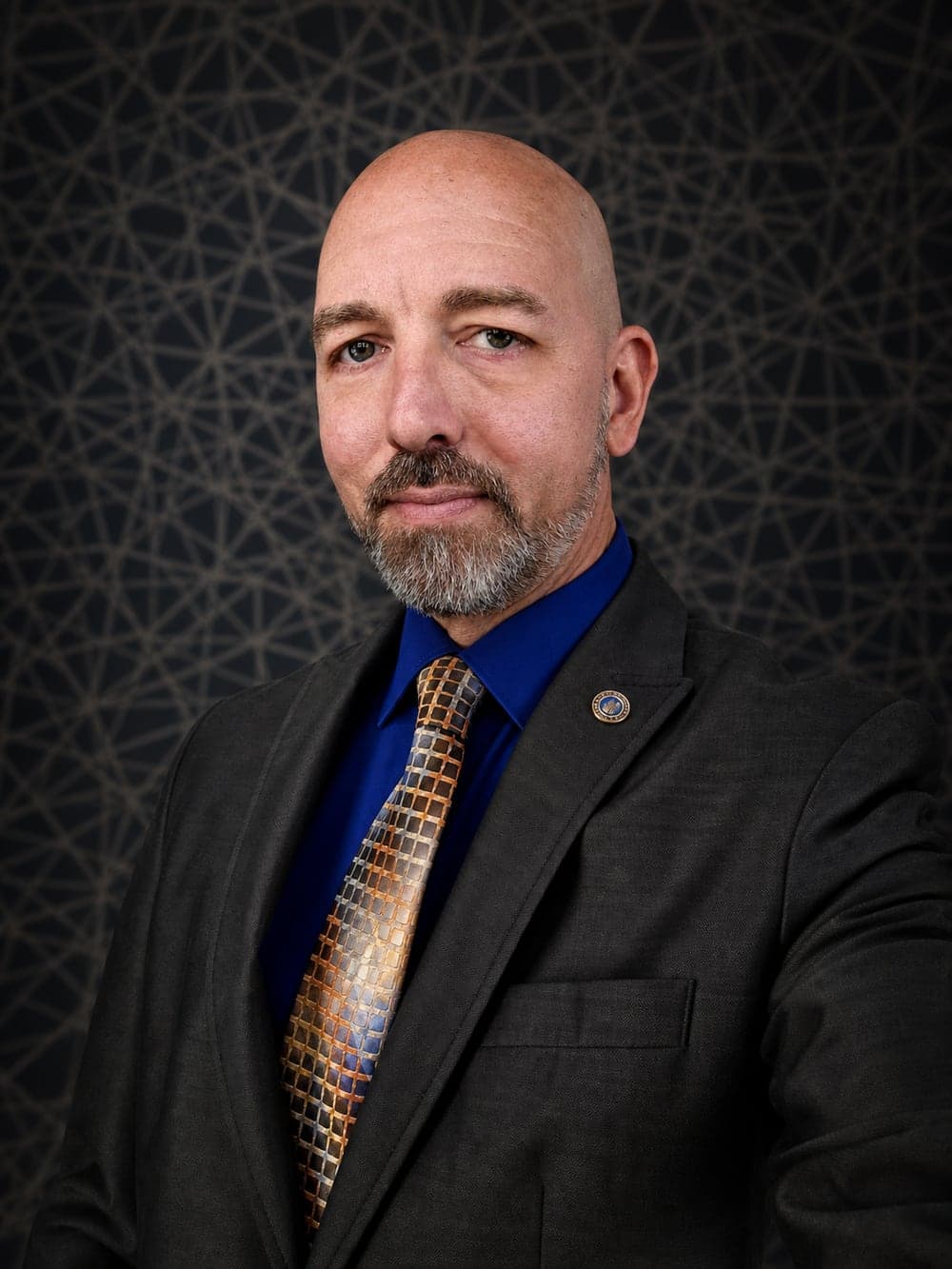
Founded and led by Jerry W. Zalesak
Wonder Constant Labs is founder-led. Jerry W. Zalesak chooses what the Lab studies, builds the instruments it studies with, and is answerable for everything published here.
Jerry W. Zalesak is a builder first. Before Wonder Constant Labs he designed and shipped the first working form of the system underneath RECON — messy public inputs, real failure modes, and a number at the end that somebody acts on. Wonder Constant Labs has since redesigned and commercialised it as the RECON Intelligence System: a live product for business owners and for professional teams evaluating local businesses.
Building it kept returning him to the same problem in different clothes. A score is a model. A model rests on an instrument. And an instrument nobody has characterised will keep producing confident numbers whether or not it is measuring the thing anyone cares about. Once you have watched that happen inside a system you built yourself, it becomes difficult to ignore in the dashboards, rankings, forecasts, and indices that are read as facts and were never stated as claims.
Wonder Constant Labs exists to work on that directly rather than as a side effect of shipping a product. Mathematics is the part of the work he trusts most, for an unglamorous reason: it refuses to be approximately meant. It forces a question into a form precise enough that someone else can show you are wrong — which is the only mechanism by which any of this improves. Uncertainty stated as a number can be argued with; confidence stated as a tone cannot.
The company pairs research with engineering because he does not believe the two separate cleanly. A question becomes answerable when someone builds the thing that measures it, and a model becomes useful when somebody other than its author can run it. Left as essays and notebooks, the work would stay unfalsifiable and unusable at the same time. Built as a company, it can carry instruments, datasets, and software that outlast the person who started them — which is the only version of this worth doing.
Jerry is personally accountable for:
- Choosing which questions the Lab takes on — and closing the ones nobody can state a test for.
- Building Project Prism: the decomposition harness, the synthetic system generator, and the software around them.
- RECON's product direction, operation, and public claims.
- Everything published on this site, including the register of what has not been established.
- Reviewing company, research, and collaboration correspondence.
06Company facts
The whole record, in 11 lines
Everything below can be checked — on this site, or by writing to an address that answers.
- Company
- Wonder Constant Labs
- Legal entity
- Wonder Constant Labs, Inc. — Virginia stock corporation
- Formation effective
- August 29, 2026
- Type
- Independent research and engineering company
- Founder
- Jerry W. Zalesak
- Leadership
- Founder-led
- Commercial product
- RECON Intelligence System
- Active initiative
- Project Lattice
- Research status
- Active
- Public contact
- hello@wonderconstantlabs.com
- Research contact
- research@wonderconstantlabs.com
07Accountability
How to check us
Each commitment below carries the test you can apply to this site — today, without contacting anyone.
Every initiative states how far along it actually is.
TestOpen any initiative. It carries one of four statuses and a dated log, and none of them is decorative.
An initiative that has published nothing says so, in those words.
TestRead the findings section of any initiative. Where there is nothing to report, it reports nothing.
Known limitations are published beside the work, not after someone asks.
TestEvery initiative that has produced anything lists what it cannot yet support.
Methods are published before results, so a result can be checked against the process that produced it.
TestThe full ten-stage pipeline is public, and each stage names the artefact it owes.
Corrections are published as entries, not as silent edits.
TestWhen something here turns out to be wrong, the correction will appear in the journal with its date.
What has not been established is listed as plainly as what has.
TestThe register below is that list, and it is maintained rather than quietly retired.
08Working with the Lab
Conversations we want to be having
The list of people the Lab needs to hear from is short and specific. Every line below reaches a mailbox that is read.
Researchers
A question you think is worth the Lab's attention, a method you can see a hole in, or a system whose behaviour resists the way it is currently modelled.
research@wonderconstantlabs.comEngineers and technical collaborators
Instrumentation, pipelines, simulation, and the software around them. Concrete problems with a stated success condition go furthest here.
research@wonderconstantlabs.comProspective partners
Organisations holding data, instruments, or a system worth studying together. We will say plainly what the Lab can and cannot support today.
hello@wonderconstantlabs.comInvestors and company-level enquiries
Company-level conversations go directly to the founder.
jerry@wonderconstantlabs.comCareers and contractor opportunities
Wonder Constant Labs is recruiting Independent Sales Representatives for RECON. Experienced local B2B sales professionals are encouraged to review the role and apply.
See the rolecareers@wonderconstantlabs.comPress
Background, interviews, and anything you intend to publish about the Lab. We would rather be quoted accurately than generously.
press@wonderconstantlabs.com09Disciplines
What we work across
Eight disciplines held together by a single method: observe carefully, state precisely, measure the uncertainty, revise.
Mathematics
The language we use to state a system precisely enough to be wrong about it.
Engineering
Turning a question into an instrument — something built well enough to trust its readings.
Computer Science
Structure, computation, and the limits of what can be known efficiently.
Data Science
Estimating what the evidence supports, and how far it can be carried.
Scientific Observation
Watching a system carefully before deciding what it is. Description precedes explanation.
Modelling & Simulation
Compact representations we can run forward, stress, and compare against reality.
Empirical Research
Designing tests whose outcomes could change our mind — and reporting them either way.
Software Engineering
The tools, pipelines, and reproducible systems that make the rest of the work real.
10Where we are
Where the work stands.
Wonder Constant Labs runs a live commercial product, RECON, alongside research initiatives with work underway, and keeps product operation distinct from research evidence in its public records.
Research findings are published here with their methods and their uncertainty attached. This site says what is true, and nothing more.